Article
What Is the Tipped Minimum Wage—and How Does It Work?
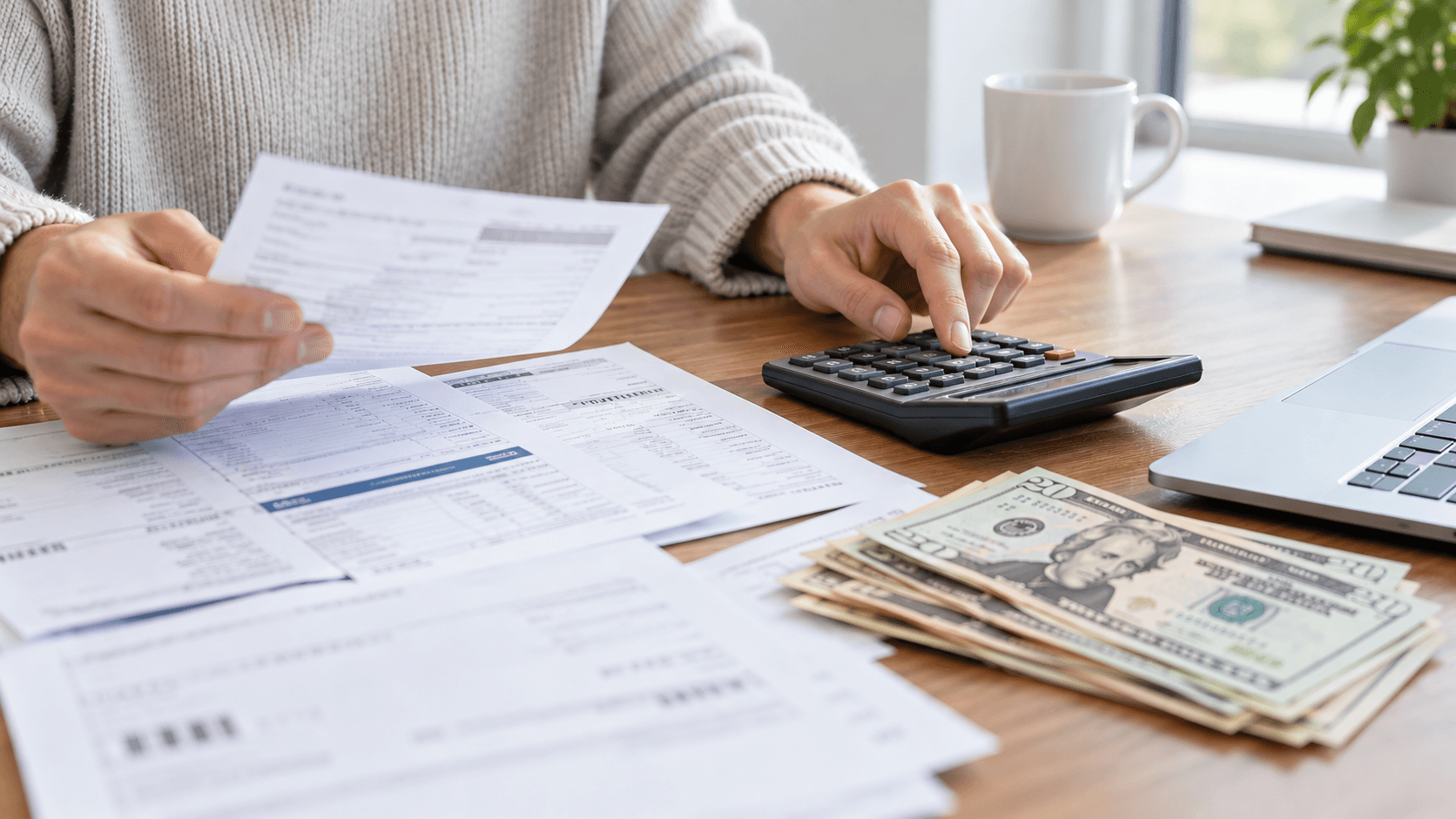
A server’s base pay can differ across state lines. Federal law allows qualifying employers to count customer tips toward the minimum wage. State rules can require much higher direct pay. Washington, for example, requires tipped workers to receive the full $17.13 state minimum in 2026. The tipped minimum tells you how much of that hourly pay must come directly from the business. The tipped minimum wage affects the worker’s paycheck, while customers still choose their own gratuity.
The Federal Rule Still Uses a $2.13 Cash Wage
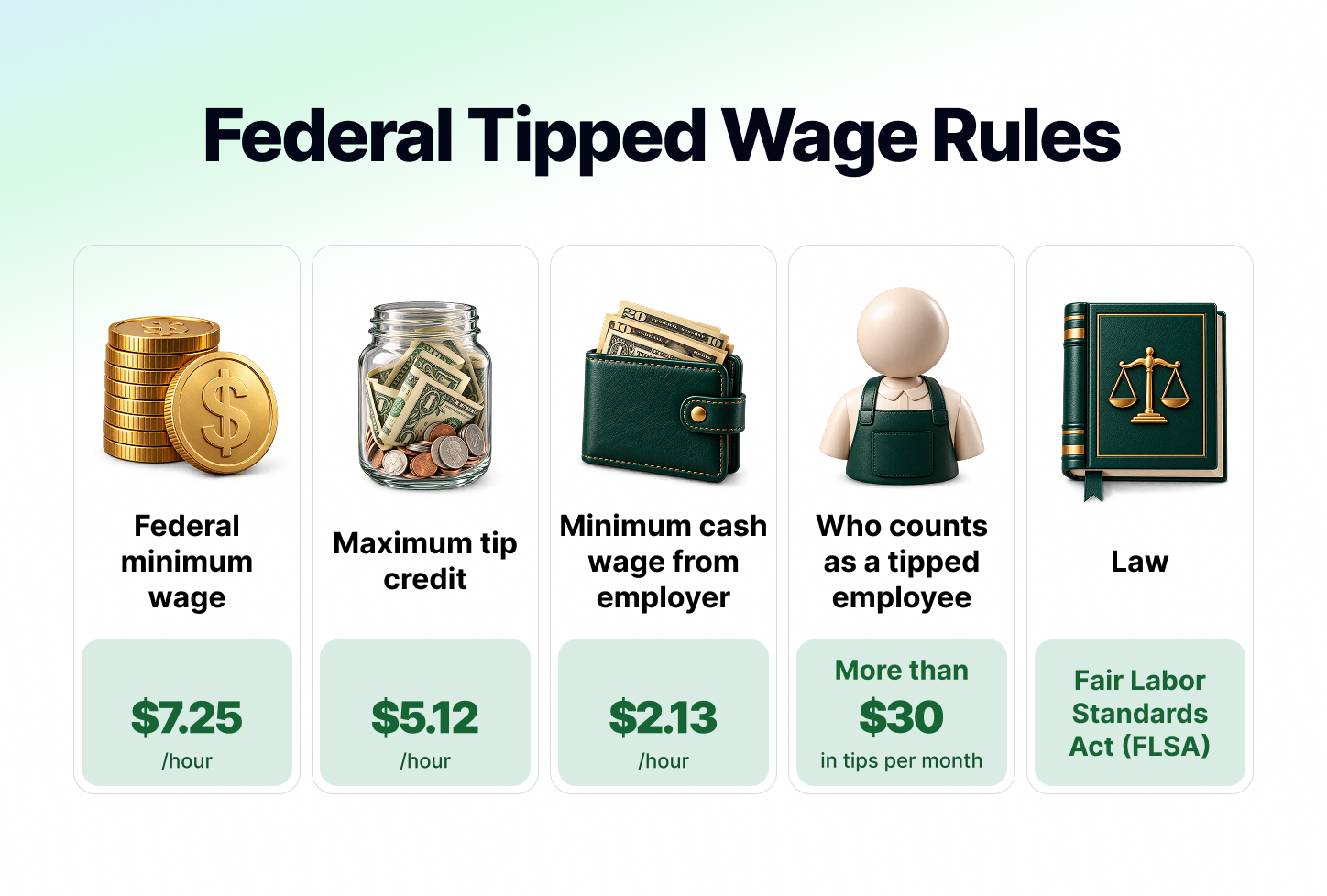
Under federal rules, some tipped workers can receive $2.13 an hour directly from their employer. Tips account for the remaining amount needed to reach the $7.25 federal minimum. If wages and tips fall short, the employer pays the difference. States can require a higher direct wage than the federal figure. Some have removed the lower tipped rate entirely. The $2.13 federal rate is only one version of tipped pay in the U.S.
States That Still Rely on the Tip Credit in 2026
Texas still follows the federal $2.13 cash-wage model. Arizona allows a much smaller tip credit and requires $12.15 of its $15.15 minimum in direct pay. Only $3 of the hourly minimum may come from tips there. New Jersey requires $6.05 in direct pay in 2026. Workers in these states all fall under tip-credit systems, yet their guaranteed hourly pay differs substantially. The size of the credit determines how much of the legal minimum can come from customer gratuities.
A High State Minimum Can Still Mean a Low Cash Wage
A state’s headline minimum wage does not always match what tipped workers receive directly. Nebraska’s minimum wage is $15 an hour in 2026, yet qualifying tipped employees may receive $2.13 from the employer. Tips can cover the remaining allowed portion of the minimum. If tips average $8 an hour, the worker is still below Nebraska’s $15 floor. The employer must cover the remaining gap. The statewide minimum alone can give a misleading picture of direct pay for tipped workers.
What Employers Must Tell Tipped Workers
Before a tip credit is used, workers have to know how it affects their pay. The employer must explain the cash wage and the amount counted from tips. If tips are pooled, workers also need to know who shares in that pool. Employees keep their tips except for amounts distributed through a valid pool. Without the required notice, the employer cannot claim the federal tip credit. The worker may then be owed the full federal minimum wage directly.
States That Raised Their Tipped Minimum Wage in 2026
Several tip-credit states increased direct pay in 2026 without removing the credit. Colorado’s tipped rate rose from $11.79 to $12.14. Maine increased its direct service wage to $7.55. New York City raised the cash wage for food service workers to $11.35 in January. In each case, employers now contribute more before customer tips are counted. The tip credit continues, but a larger portion of hourly pay comes directly from the business.
Why Some 2026 Increases Happened Automatically
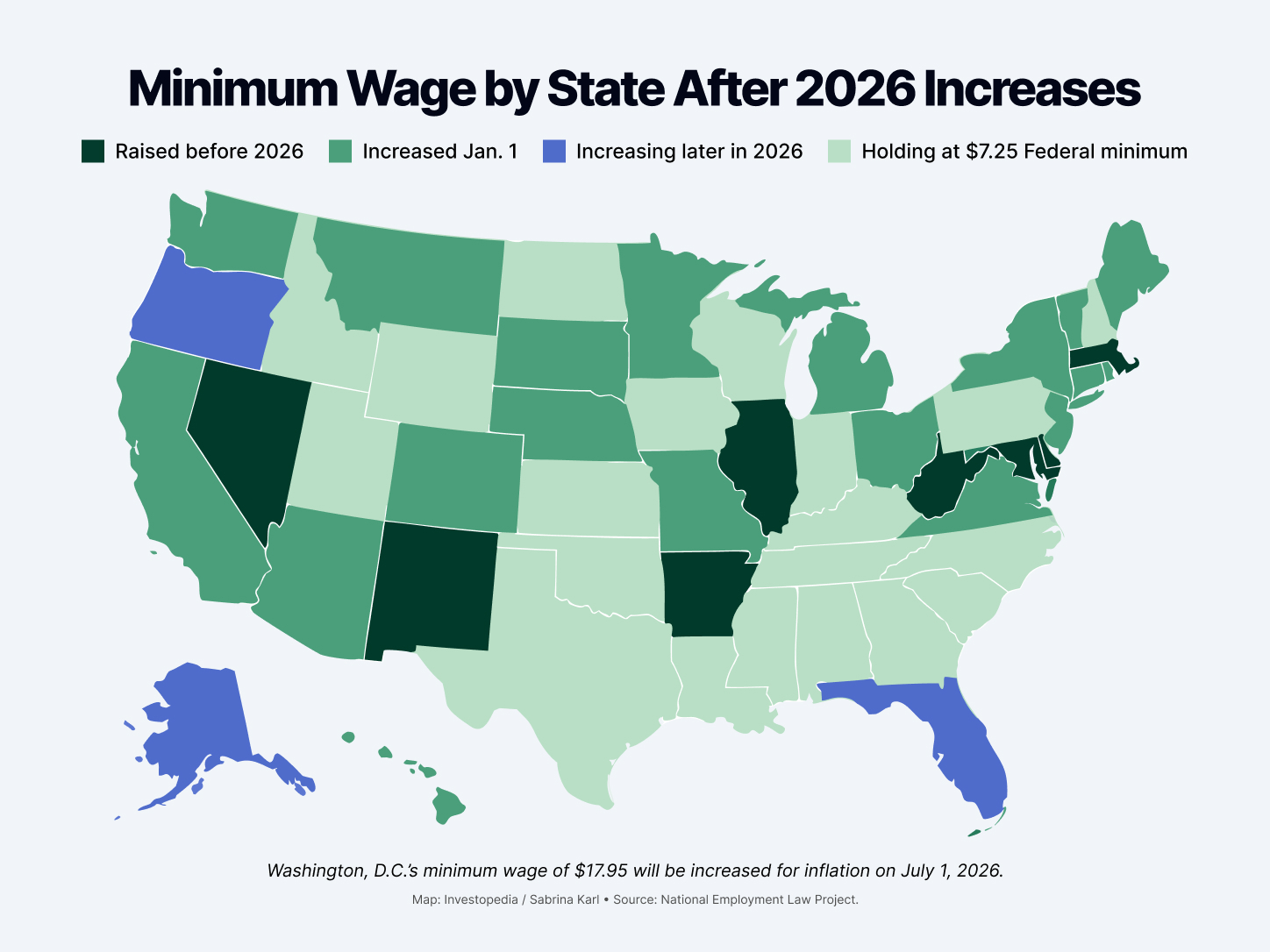
Not every 2026 increase required lawmakers to pass a new wage law. Oregon adjusts its minimum each July using changes in the Consumer Price Index. Washington also recalculates its rate annually, bringing the 2026 minimum to $17.13. Both states already require the regular minimum wage for tipped employees. Their annual adjustments raise that guaranteed hourly amount automatically.
States Where Tipped Workers Receive the Full Minimum Wage
California, Oregon, Washington, Minnesota, Nevada, and Alaska do not use a lower hourly minimum for tipped workers. Employees receive the applicable state minimum before customer gratuities are added. A server there does not need tips to bring hourly pay up to the legal minimum. This changes the role gratuities play in total earnings. In a tip-credit state, customer tips may cover a permitted portion of minimum wage. A gratuity tip in these states comes on top of the required wage.
Full Minimum Wage States Still Tip
Restaurant tips remain common in states where employers pay the full minimum wage. In Q2 2026, Nevada was at 18.1% and Minnesota at 19.1%. Indiana, a tip-credit state, came in at 20.4%. These figures do not establish a direct link between wage structure and tip percentage. Customers in full-minimum-wage states may leave percentages close to those recorded in tip-credit states.
Local Wage Rules Can Push Pay Above the State Rate
California’s statewide minimum is $16.90 in 2026, but some cities and counties require more. Oregon uses three regional minimums. From July 1, Portland metro is at $16.80, standard counties at $15.55, and nonurban areas at $14.55. A server in Portland may receive a higher legal hourly floor than someone doing similar work elsewhere in Oregon. The restaurant’s exact location determines which minimum wage applies.
How the Tipped Minimum Wage Influences Tip Percentage Trends
Tip percentages alone do not show the dollar value of the gratuity. A 20% tip on a $50 check adds $10. The same tip percentage on a $60 check adds $12. Menu prices can raise the dollar value of gratuities even when customers keep choosing the same rate. A stable percentage can still produce higher dollar tips when restaurant checks increase.
Does Your State’s Wage Law Affect Tip Amounts?
In Omni’s 2026 survey, 66% cited service quality when deciding how much to leave. Bill size influenced 35%, while 31% followed their usual tipping habits. Personal finances affected the amount for 25% of respondents. The survey did not measure state wage law on its own. The data therefore does not establish a direct link between wage rules and gratuity size.
How to Estimate Tips When Minimum Wage Rules Vary by State
State wage rules do not change the percentage calculation on a restaurant check. At sit-down restaurants, diners often calculate the tip from the pre-tax subtotal. A $72 meal before tax puts a 20% tip at $14.40. Some payment systems calculate suggested amounts before tax, while others include tax. The subtotal lets diners see exactly which amount they are using. A tip percentage calculator can then convert the chosen rate into dollars.
How Much Should You Tip in a Higher-Wage State?
A higher state minimum does not create a different tipping scale for diners. If the restaurant includes a service charge, read what it covers before adding anything extra. That charge is set by the business, and any additional gratuity is voluntary. Higher base pay changes the worker’s guaranteed wage without assigning customers a new percentage. The amount you leave may reflect the service and what is already included on the check.
Tip Percentage Guidelines: What Changes With the Type of Restaurant?
Customers leave different percentages depending on how the restaurant serves them. In Q2 2026, full-service restaurants averaged 19.1%, compared with 15.8% at quick-service restaurants. Among takeout orders with a card or digital tip, the average was 13.8%. Table service involves more direct attention throughout the meal, while counter service and pickup require less staff contact. Tip percentage guidelines should account for those differences in service instead of applying one percentage to every restaurant visit.
Using a Tip Calculator
You can find a tip percentage calculator in a browser or on some personal devices. Apple Watch includes a Tip function in its Calculator app. It can display the gratuity, final total, and each person’s share on a split check. Browser-based calculators usually ask for the check amount, tip rate, and number of diners. The result appears immediately, which makes shared checks easier to divide. These tools calculate the amount after the diner has already chosen a percentage.
What the 2026 Tipped Minimum Wage Changes Mean for Workers and Customers
A higher tipped cash wage increases the amount paid directly by the employer. This matters most on quieter shifts, when tips may be lower. The new rate applies through payroll once it takes effect. Diners may see little change because wage laws do not set customer tip percentages. For workers, the increase raises the guaranteed amount paid for each hour worked.
Conclusion
Two workers doing similar restaurant jobs may have very different guaranteed wages depending on location. State minimums, tip credits, and restaurant tip averages should not be read as one number. Wage rules explain what the restaurant must cover before gratuities. Tip percentages show what diners actually leave. Using both figures gives a clearer comparison between states.
References:
- https://www.dol.gov/agencies/whd/state/minimum-wage/tipped
- https://dol.nebraska.gov/PressRelease/Details/338
- https://cdle.colorado.gov/sites/cdle/files/adopted_2026_temporary_pay_calc_order_7_ccr_1103-14_12.12.2025.pdf
- https://www.maine.gov/labor/labor_laws/minimumwagefaq/
- https://dol.ny.gov/minimum-wage-tipped-workers
- https://www.oregon.gov/boli/workers/pages/minimum-wage.aspx
- https://www.lni.wa.gov/workers-rights/wages/minimum-wage/history-of-washington-states-minimum-wage
- https://pos.toasttab.com/blog/data/restaurant-tipping-trends
- https://www.omnicalculator.com/reports/tip-survey
- https://www.calculator.net/tip-calculator.html