Article
Is America's Tip Culture Really at a Breaking Point in 2026?
Americans still tip, but more of them are questioning how often they are asked to do it. In Popmenu’s March 2026 survey, 78% of consumers called current tipping practices ridiculous. That frustration has yet to produce the same kind of pullback at full-service restaurants. Toast reported an average tip of 19.1% in Q2 2026. Diners may be growing tired of tipping prompts, but they are still leaving familiar percentages after table service. That tension explains much of the frustration around American tipping culture in 2026.
What the Newest Surveys Actually Measure
Popmenu surveyed 1,000 U.S. adults in March to gauge current attitudes toward tipping. Omni Calculator followed with a February poll of 500 respondents. Both surveys looked at how people tip and how they feel about current tipping expectations. Toast tracks card and digital tips at restaurants, giving us actual payment data to compare with the survey responses. People can dislike tipping and still leave familiar percentages after table service.
Why Survey Sentiment and Payment Data Diverge
What people say about tipping does not always match what they do at checkout. Many Americans dislike frequent tip prompts but still leave familiar amounts after a sit-down meal. Pickup orders show a clearer pullback. Digital tips appeared on 78% of those orders in 2022, compared with 62% in 2026. Full-service restaurant tipping has changed much less, so the bigger pullback is happening outside traditional dining.
What Has Changed in the Debate Over US Tipping Culture in 2026?
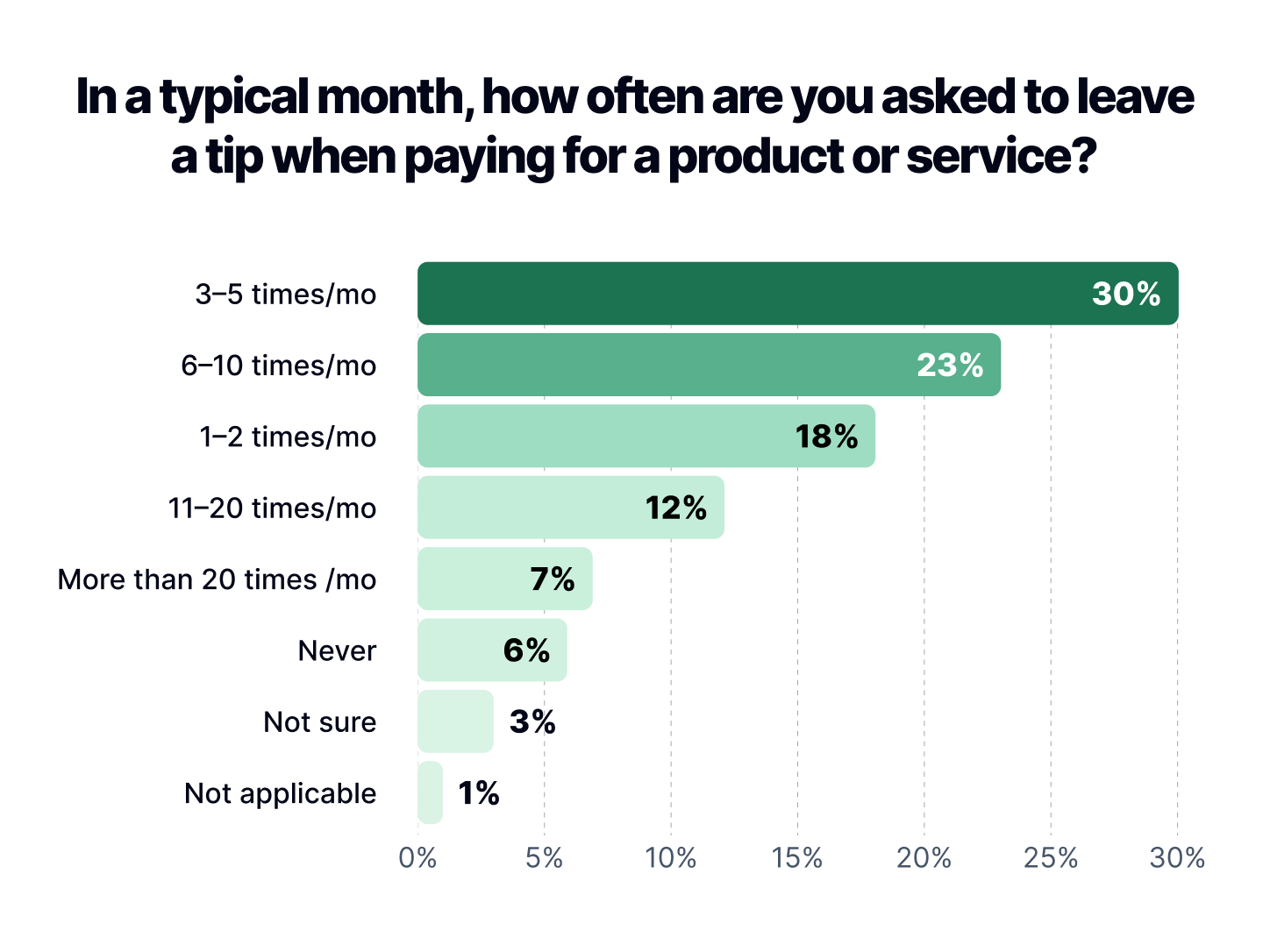
The conversation around American tip culture now extends far beyond restaurant percentages. Americans are being asked to tip in places where that request once felt unusual. A coffee order or pickup purchase may now end with a tip screen. In a 2026 survey, 62% of respondents said they see tipping requests more often than two years ago. That has brought tipping into more everyday purchases. Many customers now wonder which quick interactions really call for a tip and why gratuities carry so much weight in worker pay.
The 2026 Backlash Is Starting to Affect Spending
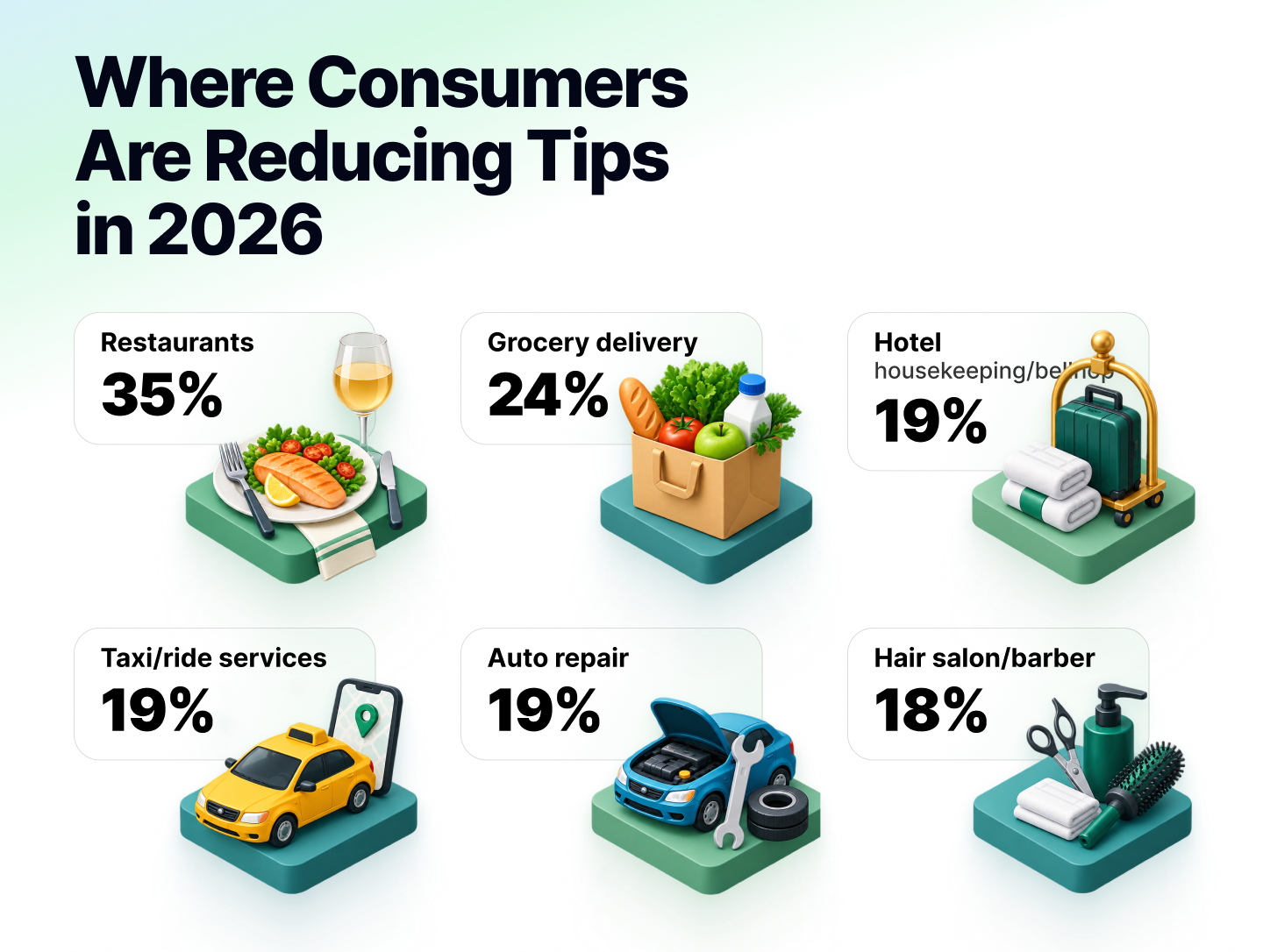
Some customers are already cutting back. Popmenu found that 44% of consumers are tipping less than a year ago. In the Omni survey, 40% had avoided certain businesses at least occasionally because of tip prompts. Negative views of tipping reached 38%, while 31% viewed it positively. Tip prompts are now changing where people spend and how much they leave.
What Americans Spend on Tips Each Month
Most respondents spend less than $50 a month on tips. Omni’s 2026 survey puts 54% in the $10-to-$49 range. A smaller share spends considerably more, with 11% reporting $50 to $74 and 8% reporting $100 to $149. Monthly spending depends on frequency as much as on the percentage someone leaves. A person who eats out several times a week will naturally spend more on tips than someone who rarely does.
From Restaurants to Retail: How Tipping Culture Spread Into Everyday Purchases
Digital checkout has expanded tipping culture in the USA beyond full-service dining. A tablet or kiosk may ask for a gratuity before the payment is complete. Pew documented this change in 2023 as tip prompts appeared in more types of businesses. By 2026, customers regularly see them after a coffee order or a takeout purchase. A transaction that once ended at the listed price may now include a tip request.
Terminal-Based Tipping and “Guilt-Tripping” in the US
The pressure often comes from choosing a tip in front of another person. In Omni’s 2026 survey, 66% felt pressured when an employee could see the payment screen, and half disliked preset tip options. Popmenu found that 59% felt compelled when a digital screen requested a tip. Starbucks is expanding card tipping in its U.S. company-operated stores. In April 2026, the company said the option would be added to Mobile Order & Pay and Scan & Pay. Wyndham introduced mobile tipping back in 2022. At participating hotels, guests could scan a QR code and leave a digital tip for housekeepers and other staff. Popmenu also found that 42% of consumers were becoming more comfortable skipping gratuities for certain services.
What Diners Do With Suggested Tip Buttons
Digital tip screens usually give customers several preset percentages to choose from. In Popmenu’s 2026 survey, 74% said restaurants had raised the lowest suggested tip percentage. Thirty-six percent usually enter a custom tip when those recommendations appear. Thirty-two percent choose the middle option, while 17% select the lowest one. Only 7% usually choose the highest suggestion. Many diners still prefer to decide the amount themselves.
What Current Restaurant Tip Averages Reveal
The average tip USA figures vary by restaurant type. Quick-service restaurant tips averaged 15.8% in Q2 2026. For takeout orders, customers who tipped left 13.8% on average. Toast calculates both figures from card and digital transactions on its platform. Both averages are lower than what diners typically leave after full-service dining. Among the restaurant categories tracked, takeout had the lowest average.
How Much Restaurant Tipping Varies by State
The gap between states is easy to see in the Q2 2026 data. Delaware averaged 21.4%, while California was at 17.1%. West Virginia was just over 20%, while Washington was at 17.6%. Local wage rules may be one reason the numbers vary. The mix of full-service and quick-service restaurants can affect state averages too. Both factors can affect how state averages compare with the national figure. Regional differences also help explain why US tipping culture does not look exactly the same everywhere.
Rising Prices Are Reshaping Tipping Habits
Restaurant prices are pushing some customers to rethink how often they go out and what they leave as a tip. In LendingTree’s survey, 66% said inflation had changed their tipping habits. Thirty-nine percent said they were dining out less to save money. Eleven percent were choosing takeout to spend less on gratuities. Sixteen percent had stopped ordering delivery to cut food costs. For many diners, saving money now starts before they decide how much to leave.
How Often Americans Tip Across Services
Omni’s 2026 survey shows the highest tipping frequency at sit-down restaurants, where 93% say they always or often leave one. Food delivery follows at 77%, with personal care services at 66%. Taxis and ride-hailing come in at 52%, while coffee shops are at 36%. The 57-point spread between sit-down restaurants and coffee shops shows how much tipping still depends on the service. Expectations also vary at bars, where customers may tip per drink or on the full tab.
How Tipping Habits Vary by Generation
LendingTree found that 26% of Gen Z respondents skip tips on takeout or delivery. For restaurant meals, 29% said they tip less than before. Among millennials, 20% said they now leave more. Baby boomers changed their habits less, with 64% saying they tip about the same as before.
What Still Determines the Tip Amount
Service quality still has the strongest influence on how much people leave. In Omni’s 2026 survey, 66% said it affected their tip amount. Bill size influenced 35%, while 31% pointed to their own tipping habits. Poor service often leads to a smaller tip. Fifty-four percent said they leave less than usual, and 15% usually leave nothing. A quarter said their own financial situation affects the amount. Social pressure played a role for 16%, while only 9% pointed to suggested tip prompts. Typical tip amounts also vary by service. For less familiar situations, our tip guide USA shows the typical tipping range.
Regular Customers Tip More
Regulars tend to be more generous at restaurants they know well. Toast and Resy found that 77% leave larger tips at places they visit regularly. For 46%, the increase is 5% to 10% above their usual amount. Thirty-seven percent add 10% to 15% or more. Thirty-four percent also reported a higher check at restaurants where they feel comfortable. Nearly half said being remembered matters more than earning loyalty points.
Workers vs. Consumers: Rising Tensions at the Heart of Tipping Culture
For some tipped workers, gratuities make up a large share of weekly earnings. In states that use a tip credit, the employer-paid wage may be $2.13 an hour, with tips bringing total pay to the $7.25 federal minimum. Any remaining gap comes from the employer. That leaves some workers much more dependent on what customers tip. More than half of consumers (56%) said they would pay higher menu prices for better wages and no tipping.
Tipped Workers Don’t Start From the Same Place
California and Texas show just how wide that difference can be. California requires tipped employees to receive at least $16.90 an hour before tips. Texas allows employers to follow the federal tip-credit model described above. So the same 20% restaurant tip can play a very different role in a worker’s paycheck. California workers receive the full state minimum wage before tips are added. In Texas, gratuities may account for a much larger share of weekly earnings. State wage rules are one reason American tipping culture varies across the country.
Would Diners Accept Higher Menu Prices Instead?
Moving more of worker pay into menu prices would make the cost more visible upfront. Customers still have to be comfortable with the higher bill. In July 2026, only 18% said recent restaurant price increases felt justified. Two years earlier, 41% had said the same. Approval was low, although 57% understood why prices had gone up, including higher labor costs. Most also wanted some warning before the next increase, with 69% favoring advance notice.
Could Automatic Service Charges Completely Replace Tipping Culture?
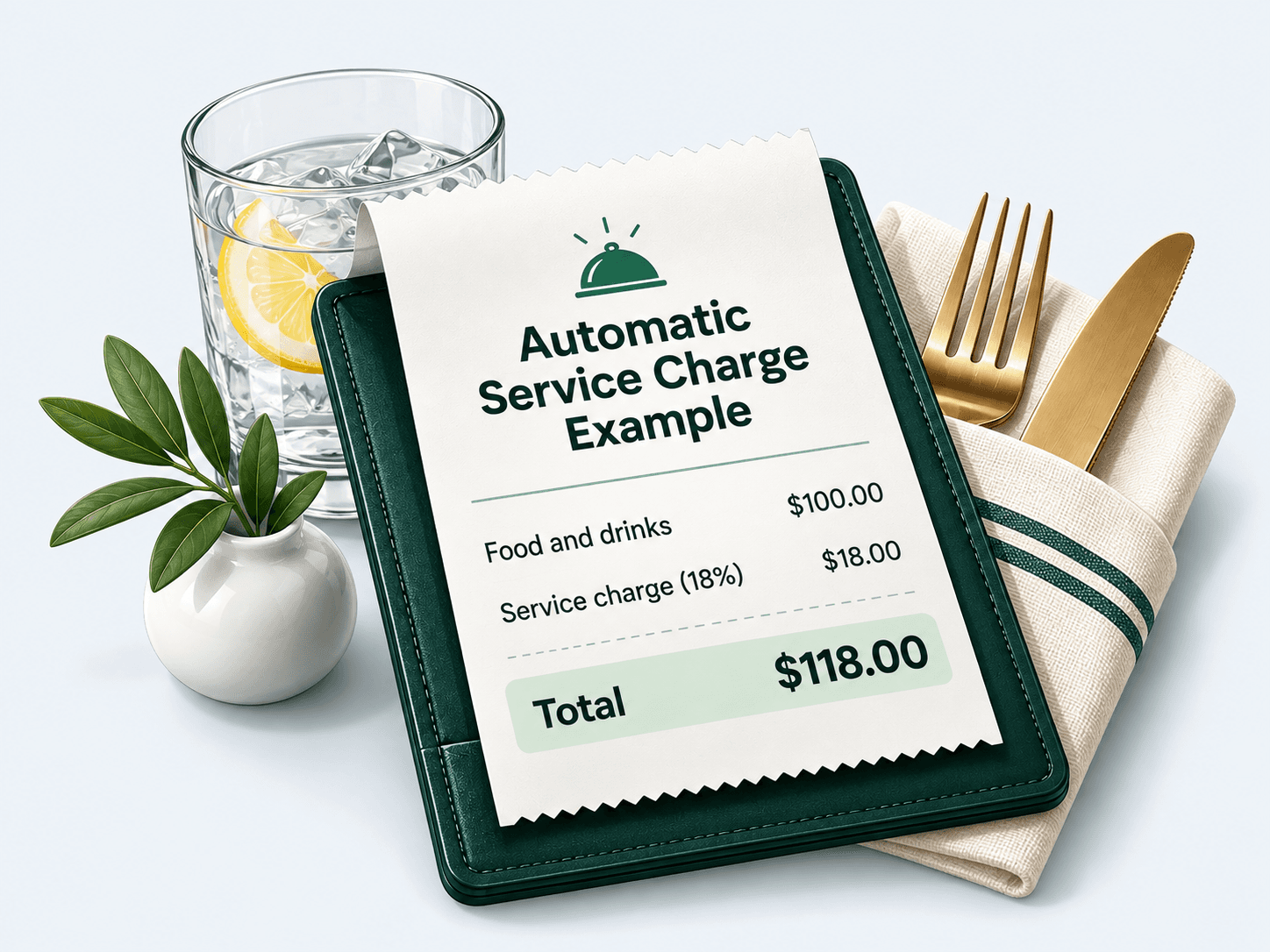
Some restaurants are looking for ways to make worker pay less dependent on individual tips. Some use automatic service charges and include them in the bill from the start. The restaurant controls that charge, and any amount paid to employees goes through regular payroll as wages. Diners can still add a tip afterward. For restaurants, this makes labor costs easier to plan from week to week. A fixed service charge puts a set amount on the bill instead of leaving the full extra payment to gratuity.
What Lies Ahead for Tipping Culture in the US
Customers are much more willing to tip after a sit-down meal than after a quick checkout interaction. Table service and other personal services still receive tips consistently, while brief transactions face more resistance. Businesses may respond with fewer prompts or higher prices that cover more of employee pay. Over time, tipping culture in the USA may stay strongest in services that involve more time and personal interaction. Tipping remains common, but fewer customers seem willing to treat every payment screen as a reason to leave one.
References:
- https://www.prnewswire.com/news-releases/fed-up-consumers-cut-tips-for-restaurants-grocery-delivery-hotels-taxisride-services-and-others-according-to-popmenus-latest-study-302736449.html
- https://pos.toasttab.com/th-us/blog/data/restaurant-tipping-trends
- https://www.omnicalculator.com/reports/tip-survey
- https://www.pewresearch.org/2023/11/09/how-americans-see-recent-developments-in-tipping/
- https://www.lendingtree.com/debt-consolidation/grocery-shopping-habits-survey/
- https://pos.toasttab.com/es-us/blog/data/do-regulars-tip-more
- https://www.dol.gov/agencies/whd/state/minimum-wage/tipped
- https://pos.toasttab.com/blog/data/restaurant-menu-prices